Your problem
AI initiatives that go nowhere
Features ship in isolation, engineering time gets spent — but there's no coherent plan connecting AI to business outcomes







Building without a strategy is the most expensive option. The cost of rebuilding the wrong AI-powered software, reversing an architecture decision, or explaining poor AI metrics to investors far exceeds a fixed-price strategy engagement. You're not delaying the build — you're making sure the first sprint goes in the right direction
You're not delaying the build — you're making sure the first sprint goes in the right direction
Most teams can produce a list of AI ideas. The hard part is deciding which ones are worth building, in what order, at what architecture cost, and with what success criteria — before committing months of engineering time.
That's exactly where internal efforts stall
If they don't provide strategic direction — what to build, why, and at what cost — you have execution capacity pointed at an unclear target. A dev shop takes a feature list and builds it.
AI Product Strategy defines the feature list first
The goal isn't to predict every model release. It's to make the right decisions about what to build now, with enough architecture flexibility to adapt as the technology evolves.
That's what modular architecture and phased roadmaps are built for
Senior AI talent is scarce, expensive, and takes 2–3 months to onboard before meaningful output. AI Product Strategy delivers a clear roadmap in 6 weeks
— and the team that built the strategy can execute it immediately after
It's rarely too late. A strategy engagement can validate what's been built, surface the decisions that still need to be made, and create a clear path from the current state to production
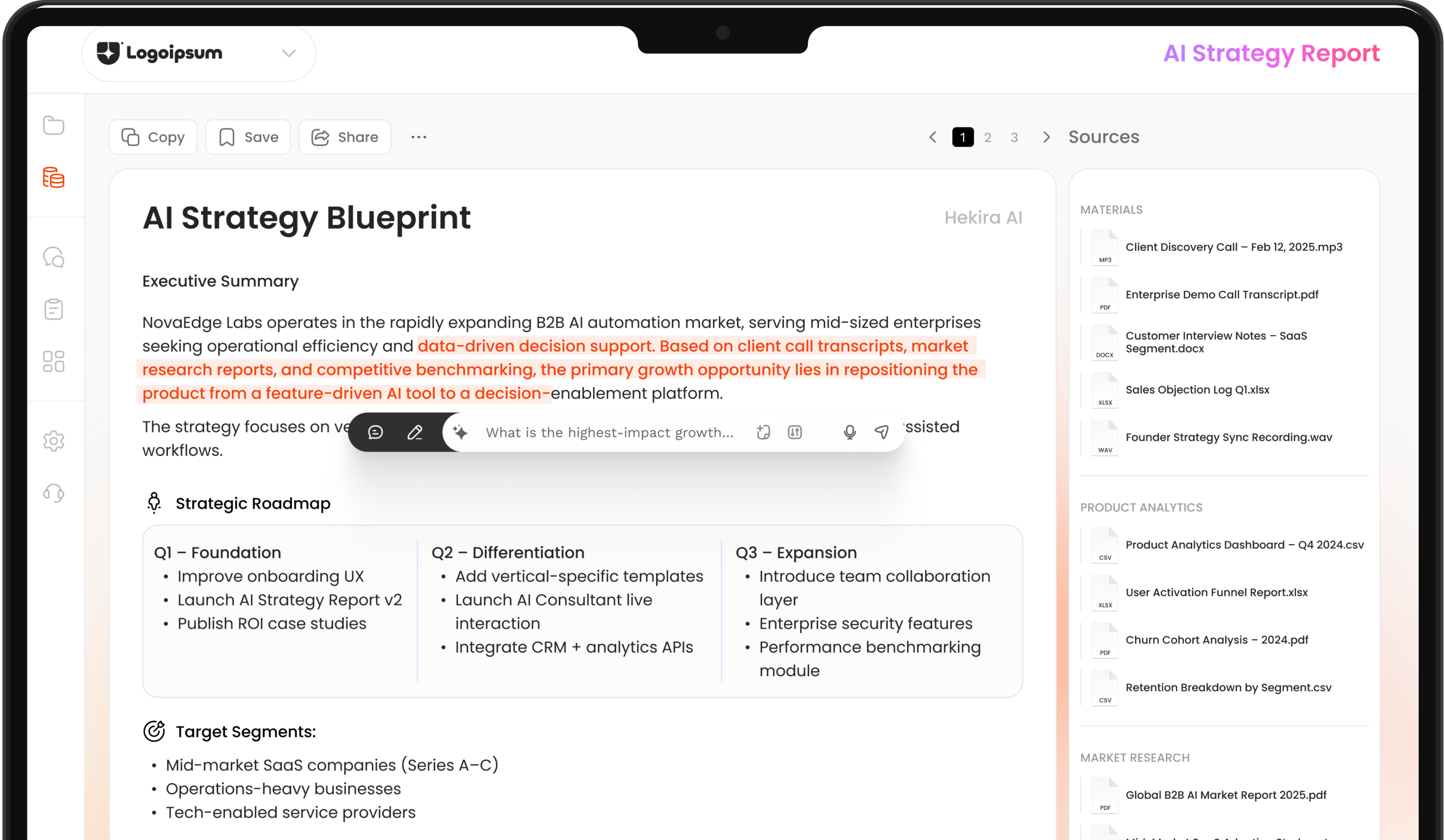
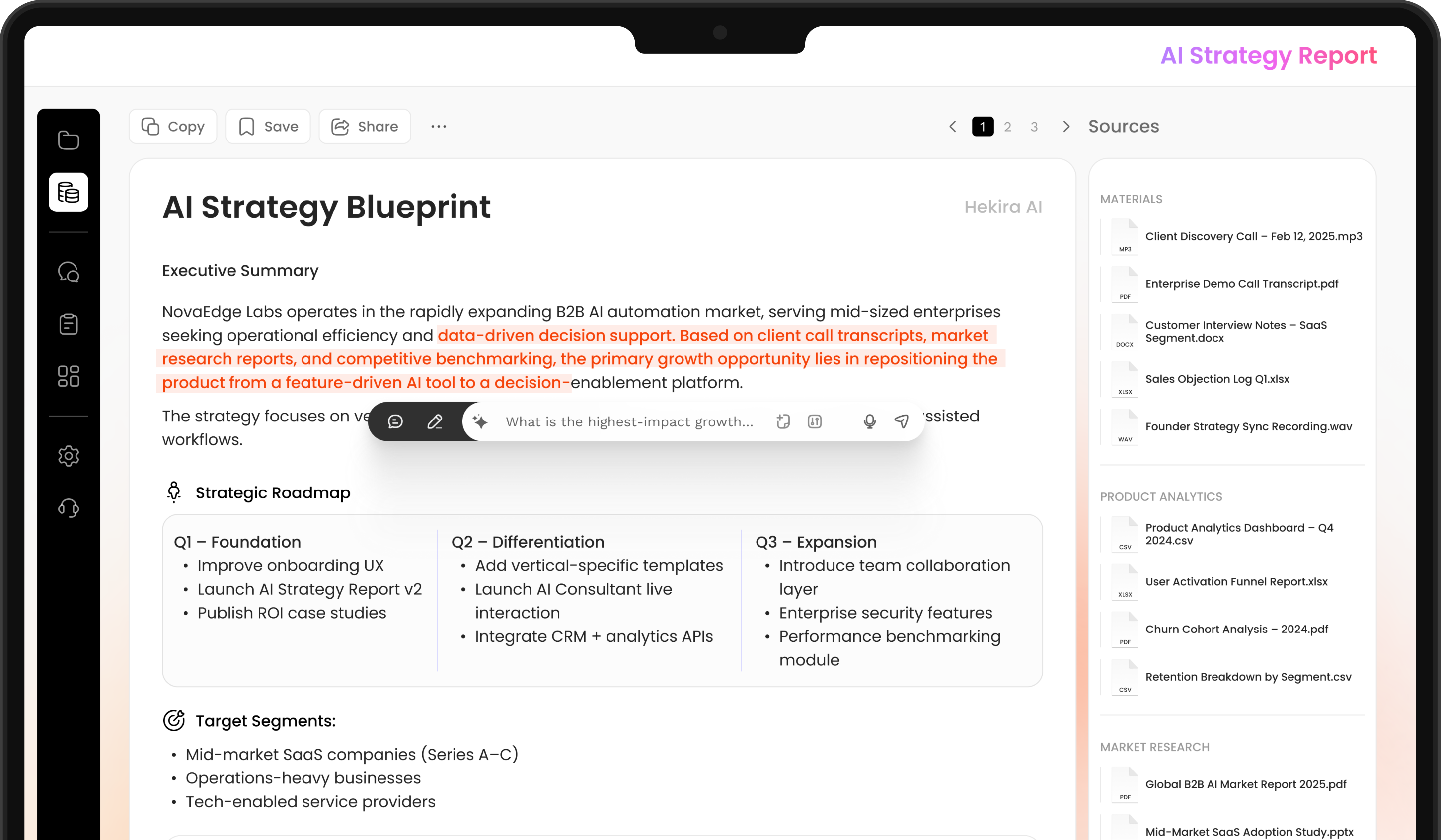
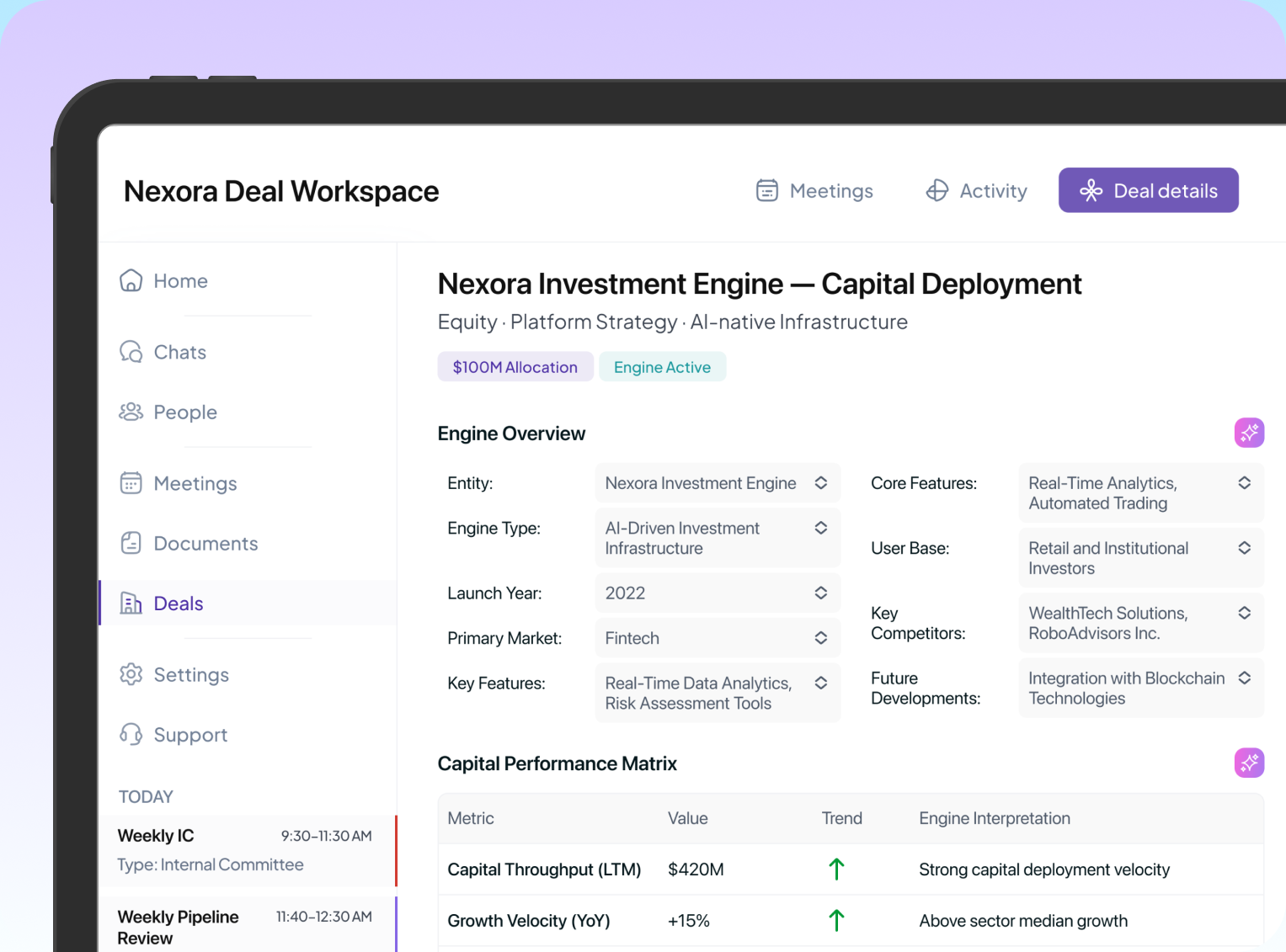
You receive a prioritised AI feature roadmap, technical architecture recommendations, AI cost model, build vs. buy analysis, competitive analysis, compliance assessment, and a 90-day execution plan